PROJECTS · 2017–2018
Physical to Digital and back again
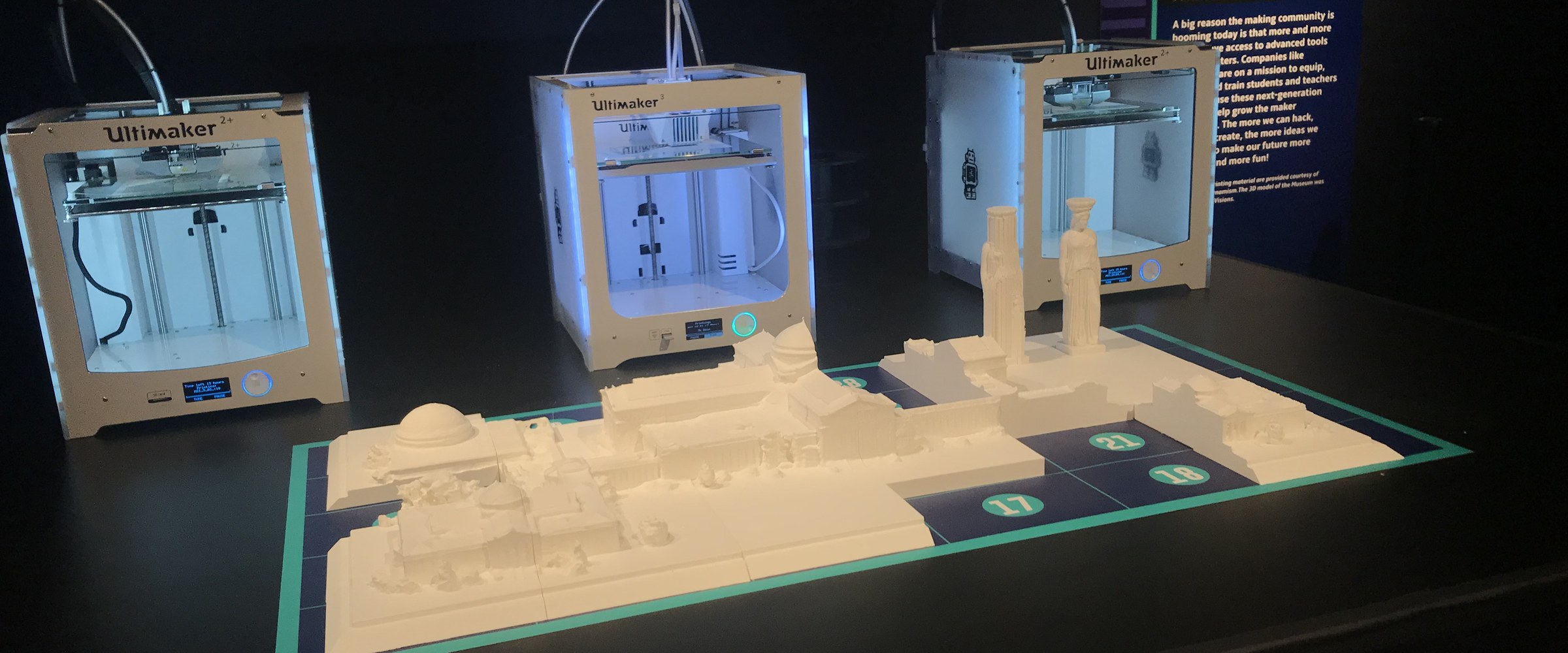
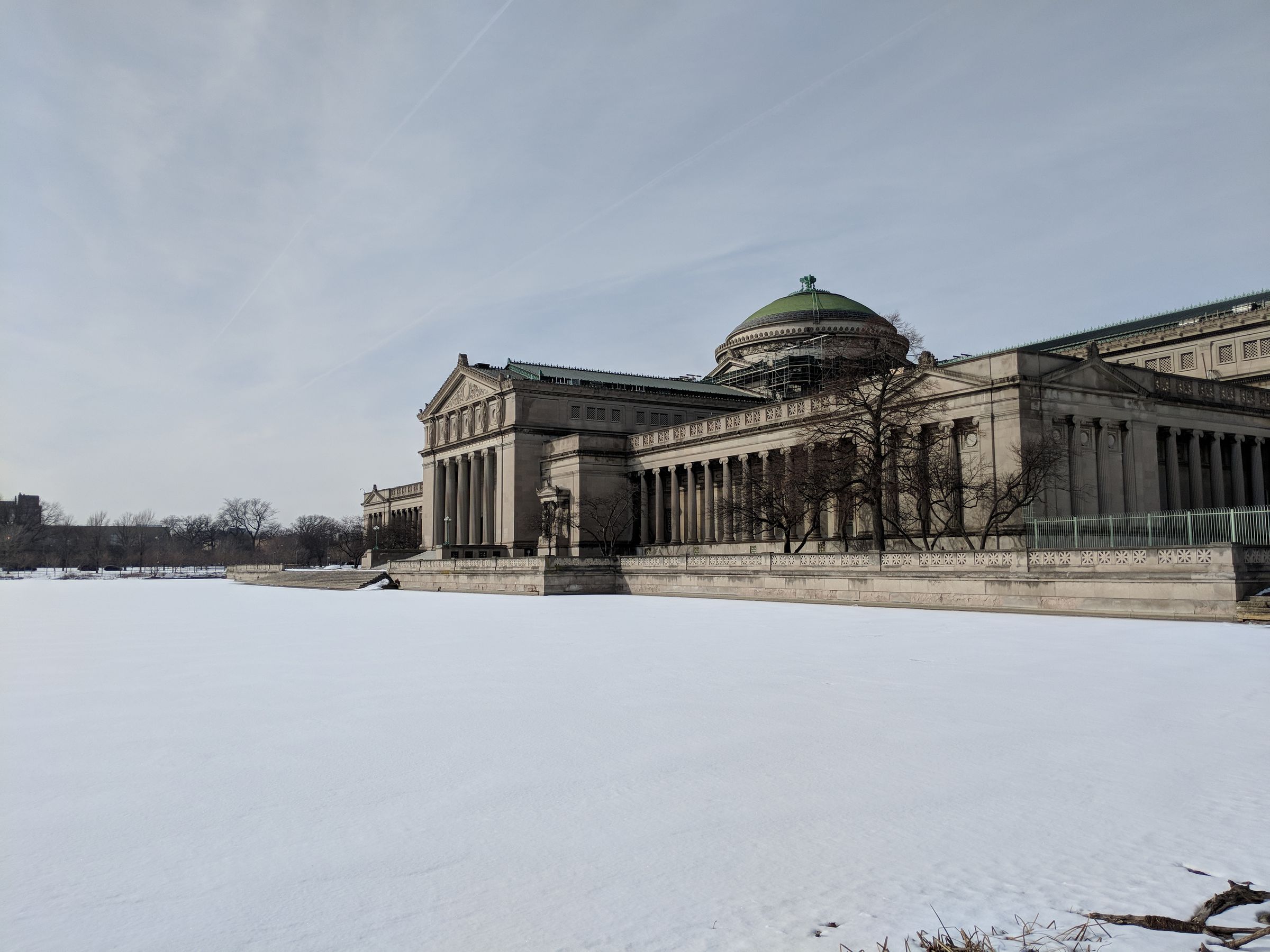
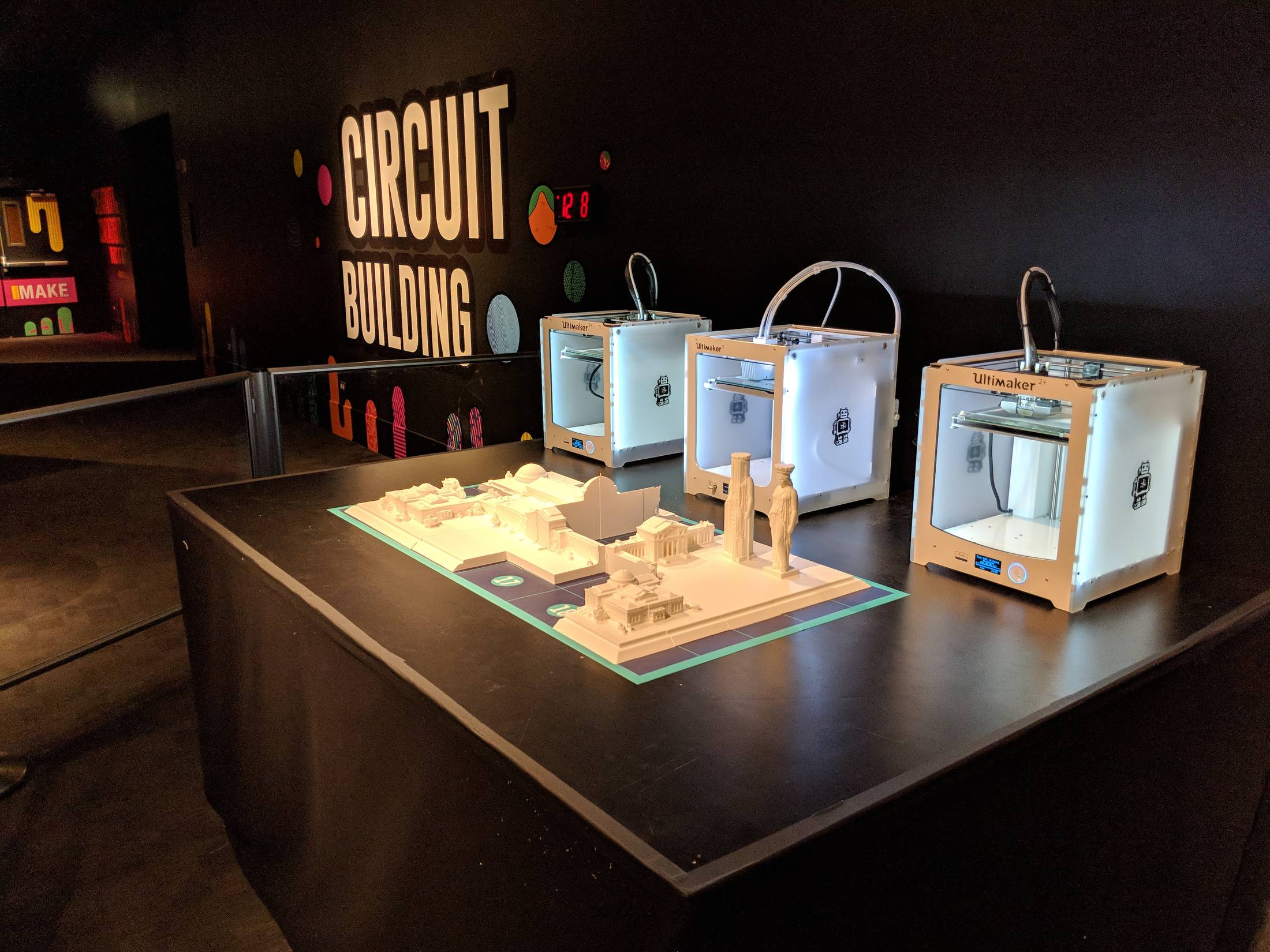
A drone scan of Chicago’s Museum of Science and Industry, turned into a printable model, split into 30 pieces and printed one a day in front of visitors. Today it’s part of the museum’s collection.
When
Spring 2017 to March 2018. The exhibit ran for the whole Spring Make Festival, March 1–31, 2018.
Where
Museum of Science and Industry (MSI), Chicago, in the Circuit Building area
My role
I was a sales and marketing manager at Dynamism, the 3D-technology company I joined in 2014. I started the project, made the scan printable, and shaped the exhibit with MSI.
With
Tyler Gibson and Ted Parisot of Helios Visions (drone scan) · Olivia Castellini, Senior Exhibit Developer, and the Fab Lab team at MSI · Dynamism 3D artists Chris Stucke and Aron Jones (mesh cleanup and dividing the model) · the Dynamism team (printers and filament) · 3D artist Thor Man de Kook (AR filter)
Tools
DJI Phantom 4 / 4 Pro drones and photogrammetry (Helios Visions) · Autodesk Meshmixer · Autodesk 123D Design · Formlabs Form 2 (proof of concept) · Ultimaker 2+ and Ultimaker 3 printers loaned by Dynamism (exhibit)
Size
About 30 inches long, assembled from 30 printed sections
Outcome
30 printed sections, the most intricate taking around 10–12 hours each. The 3D model now belongs to MSI, and the printed pieces are stored as artifacts.
A scan on Reddit
My first taste of 3D scanning came at Knox College in 2012, where I was studying computer science. I stumbled onto Autodesk’s free 123D Catch, which turns a set of ordinary photos into a 3D model, and used it to scan my boot. Then I got ambitious. I waited for an overcast day (soft light makes better scans), circled Knox’s 1857 Old Main building with a camera, and processed the photos with VisualSFM. Old Main is one of the sites of the Lincoln–Douglas debates. A friend and I even won a small grant to build a drone that could photograph it from above. We never got it off the ground, literally or figuratively, but the idea stuck.
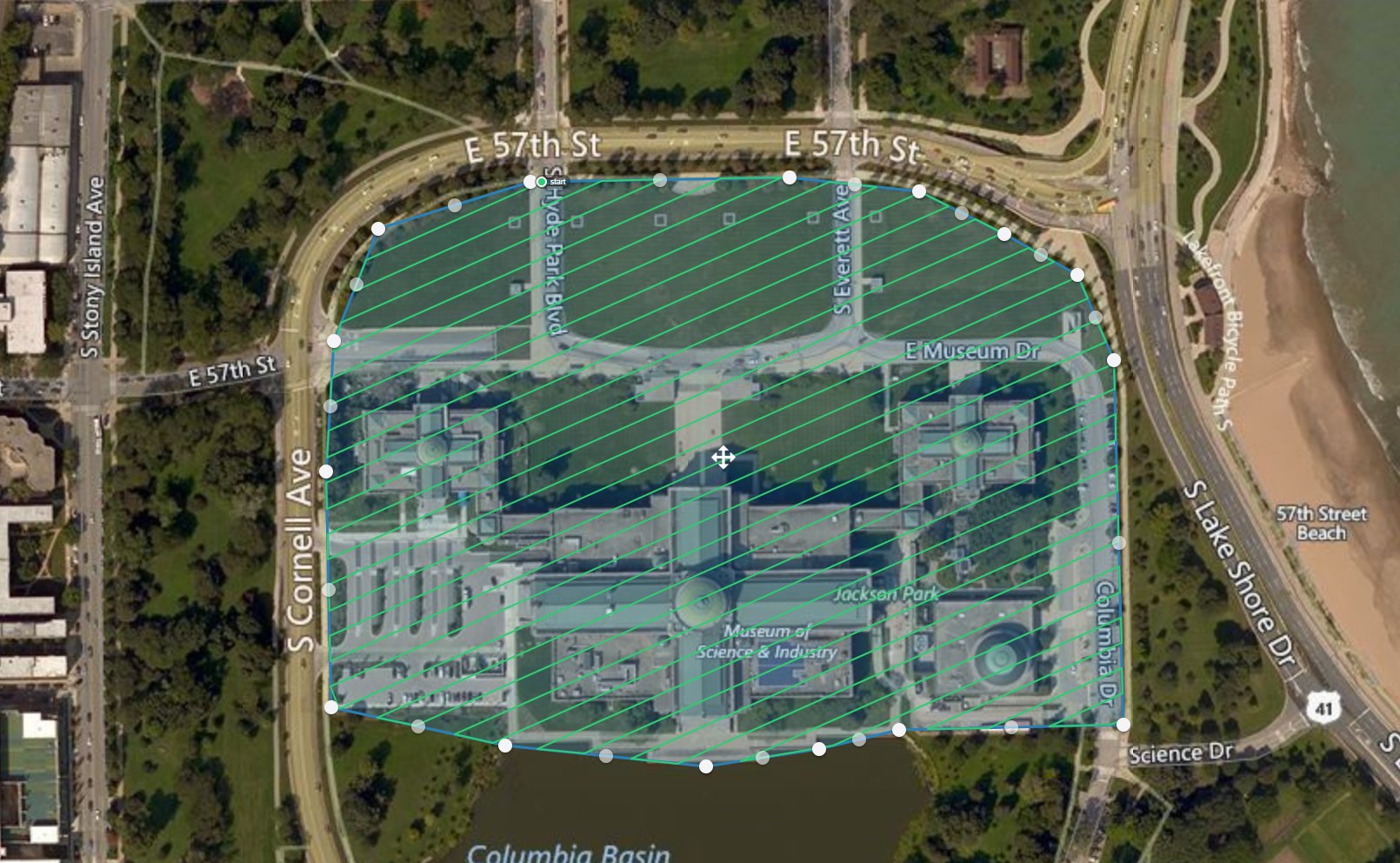
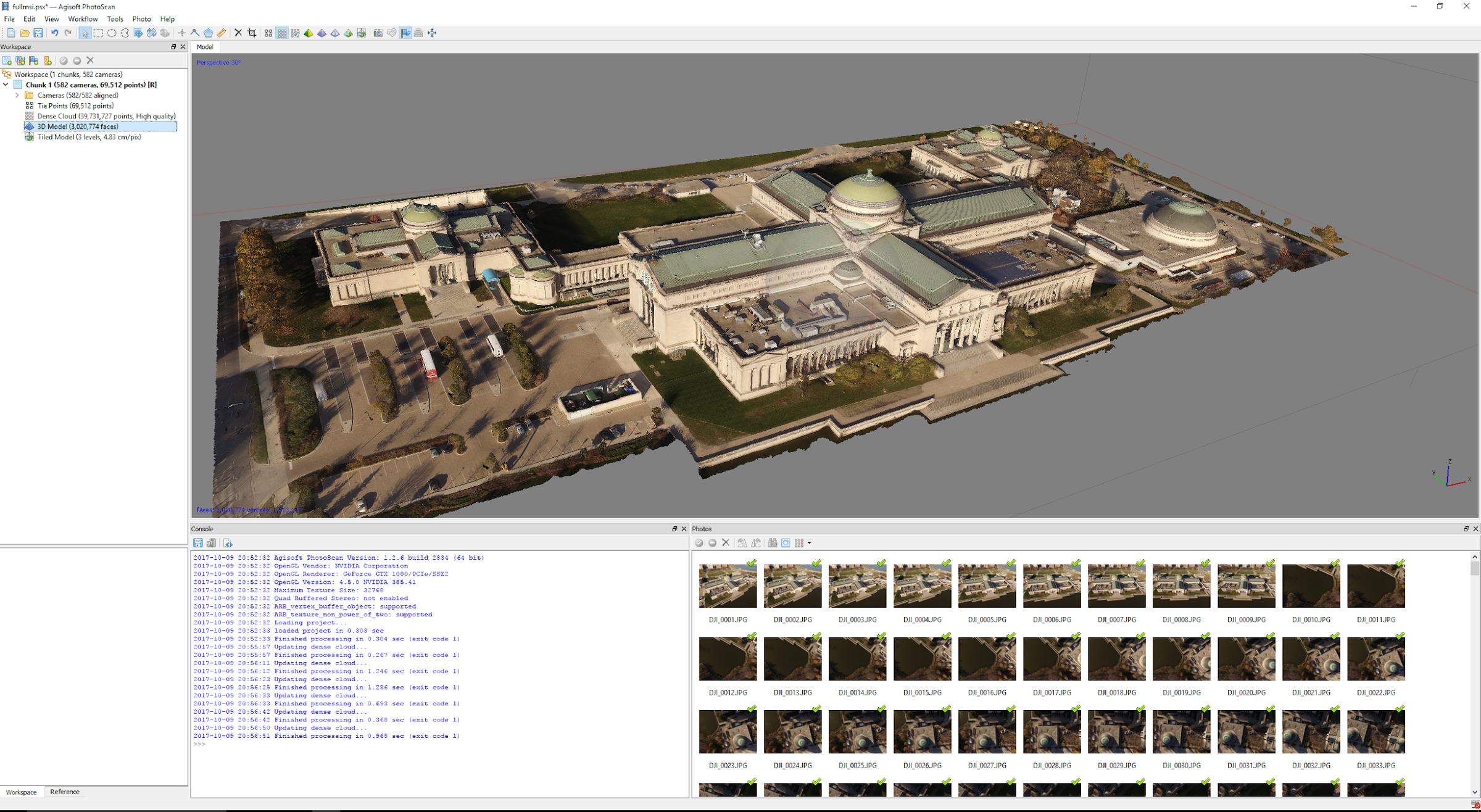
In the spring of 2017 I saw a post on r/chicago that brought it all back: a 3D scan of the Museum of Science and Industry, captured by drone and rendered with photogrammetry. Drones with good cameras had finally caught up with the idea. The scan was by Helios Visions, a Chicago drone company founded by Tyler Gibson and Ted Parisot that does aerial mapping and 3D reality capture. I’d actually met Tyler and Ted at the monthly ChiVR (Chicago Virtual Reality) meetup, so I asked whether they’d be up for turning the scan into something you could hold. To my delight, they shared their data.
Making a point cloud printable
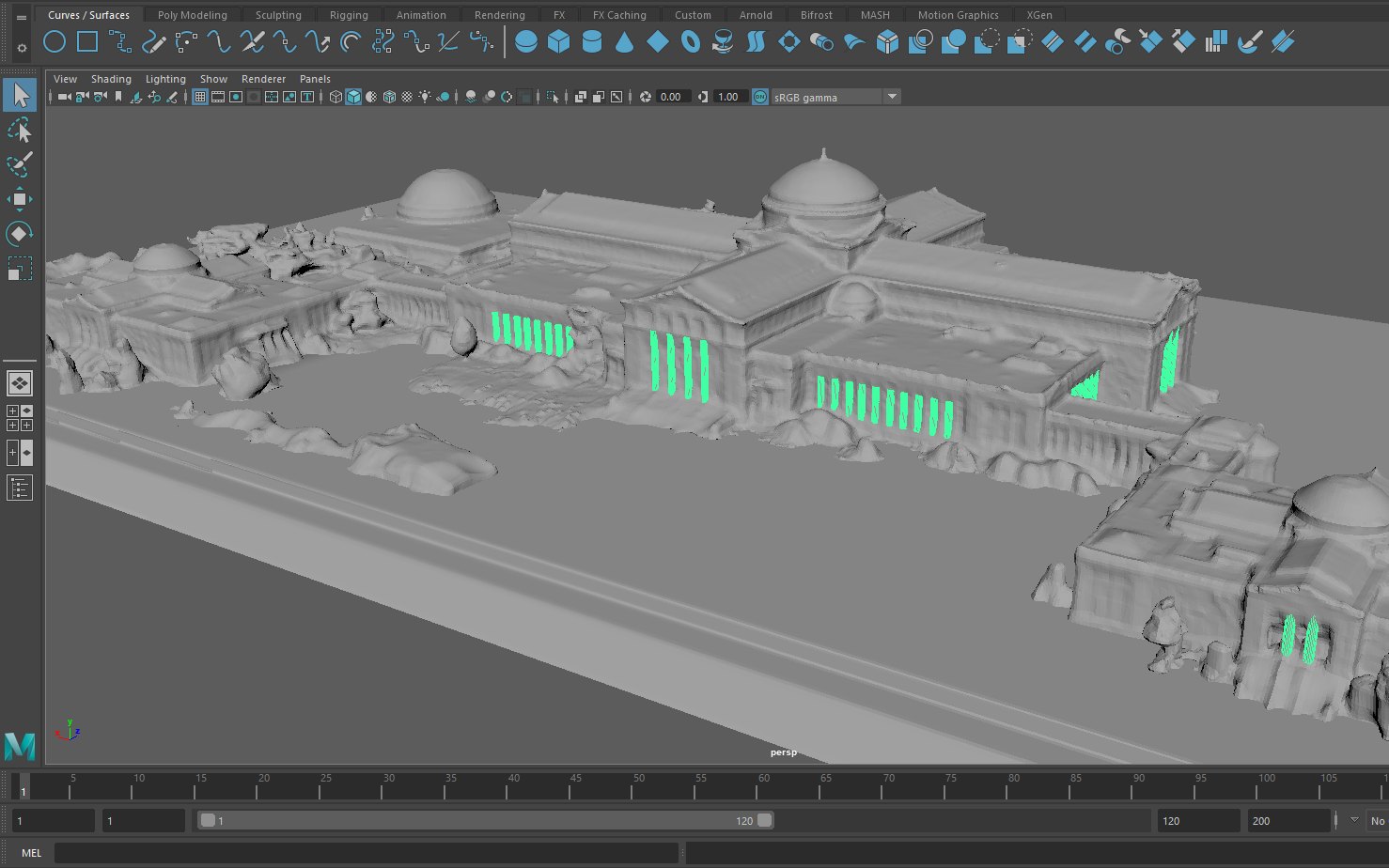
A scan looks solid on screen, but what comes out of photogrammetry is a point cloud with a surface stretched over it. There are holes wherever the drone’s cameras couldn’t see, and a printer can’t do anything with that. To print, you need a “manifold” model: one closed, watertight surface with a clear inside and outside.
I used Autodesk Meshmixer’s repair tools to close the gaps. Then, in Autodesk’s (now discontinued) 123D Design, I built a solid base for the interpolated mesh to sit on, so the museum would rest on a flat foundation instead of a ragged edge of scan data. Our 3D artists at Dynamism, Chris Stucke and Aron Jones, also took some artistic liberties with the columns along the way.
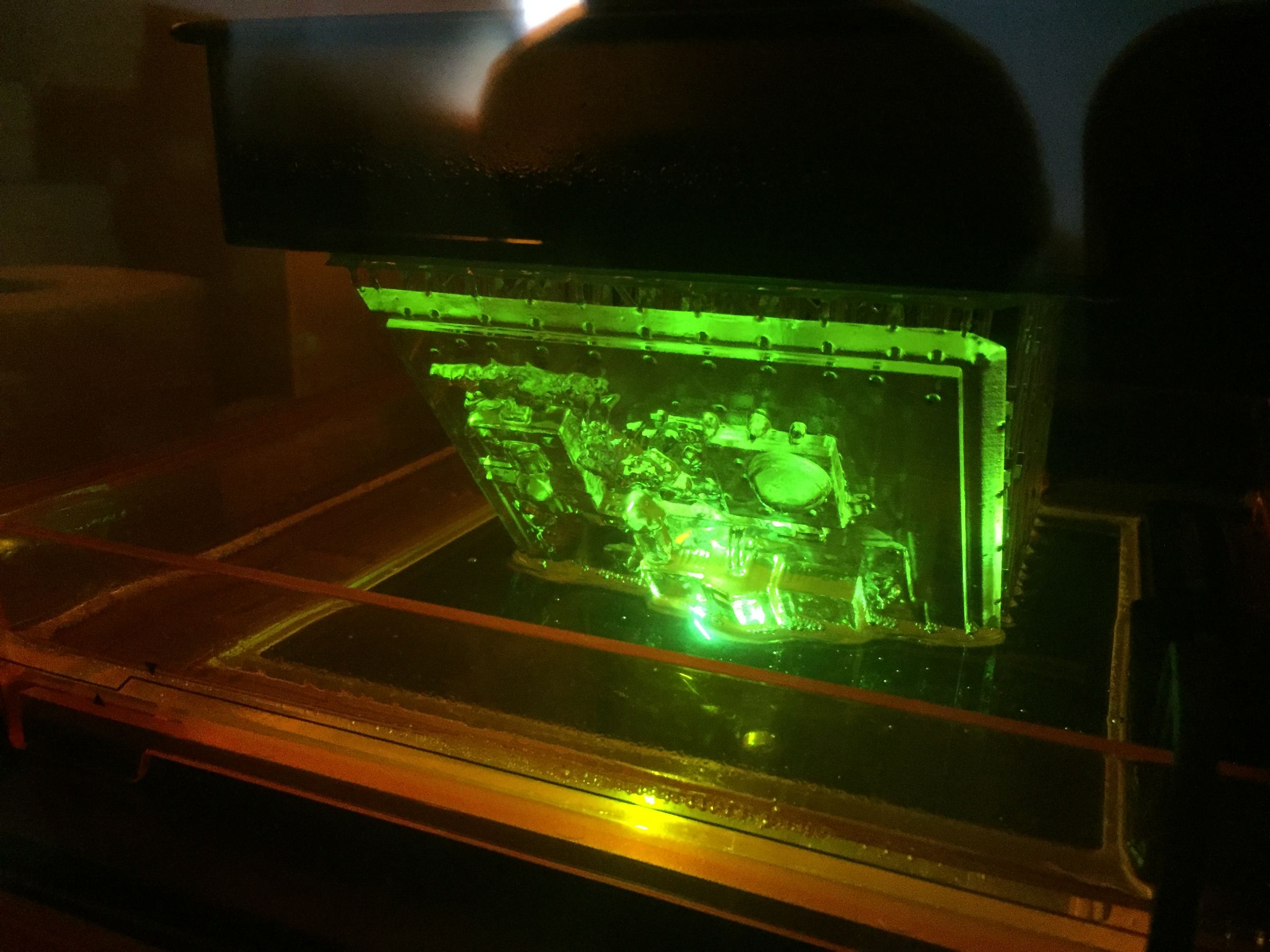
To test the result, I printed a tiny proof of concept on a Formlabs Form 2. The printer cures liquid resin layer by layer with a UV laser, building the model upside-down from the build plate, and the finished print gets a light sanding and a coat of mineral oil.
Pitching a museum
Later that summer, I got in touch with the manager of MSI’s Fab Lab and shipped them a printed model.
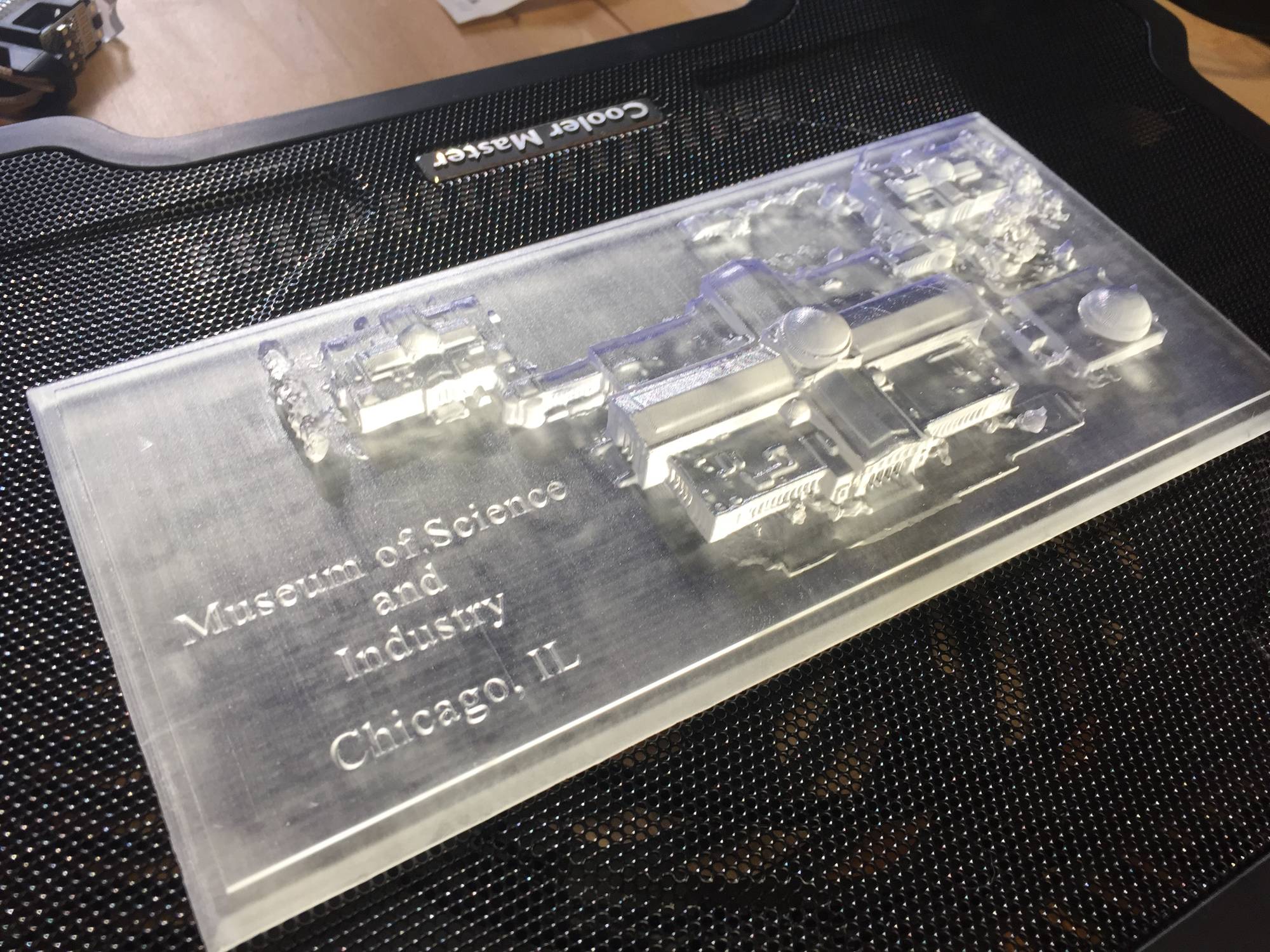
Predictably, the team at MSI loved it. It made the rounds among the staff and eventually landed on the president’s desk. Shortly after, MSI asked whether we could make a much larger version for its Spring Make Festival, a month-long celebration of the making community that ran March 1–31, 2018, and was open to ideas on how to present it.
I’d never designed a museum exhibit. But I knew what we could do with the tools we had, and I had an incredibly helpful partner in Olivia Castellini, MSI’s Senior Exhibit Developer, who helped validate the vision.
Designing a build you can watch
My first question was: how much larger? The answer turned out to be about 30 inches long. 3D printers are great for small objects, but once a model is bigger than the printer’s build volume, you have to cut it into pieces that print well and line up perfectly when assembled. My Dynamism colleague Chris Stucke spent hours in modeling software making sure they would.
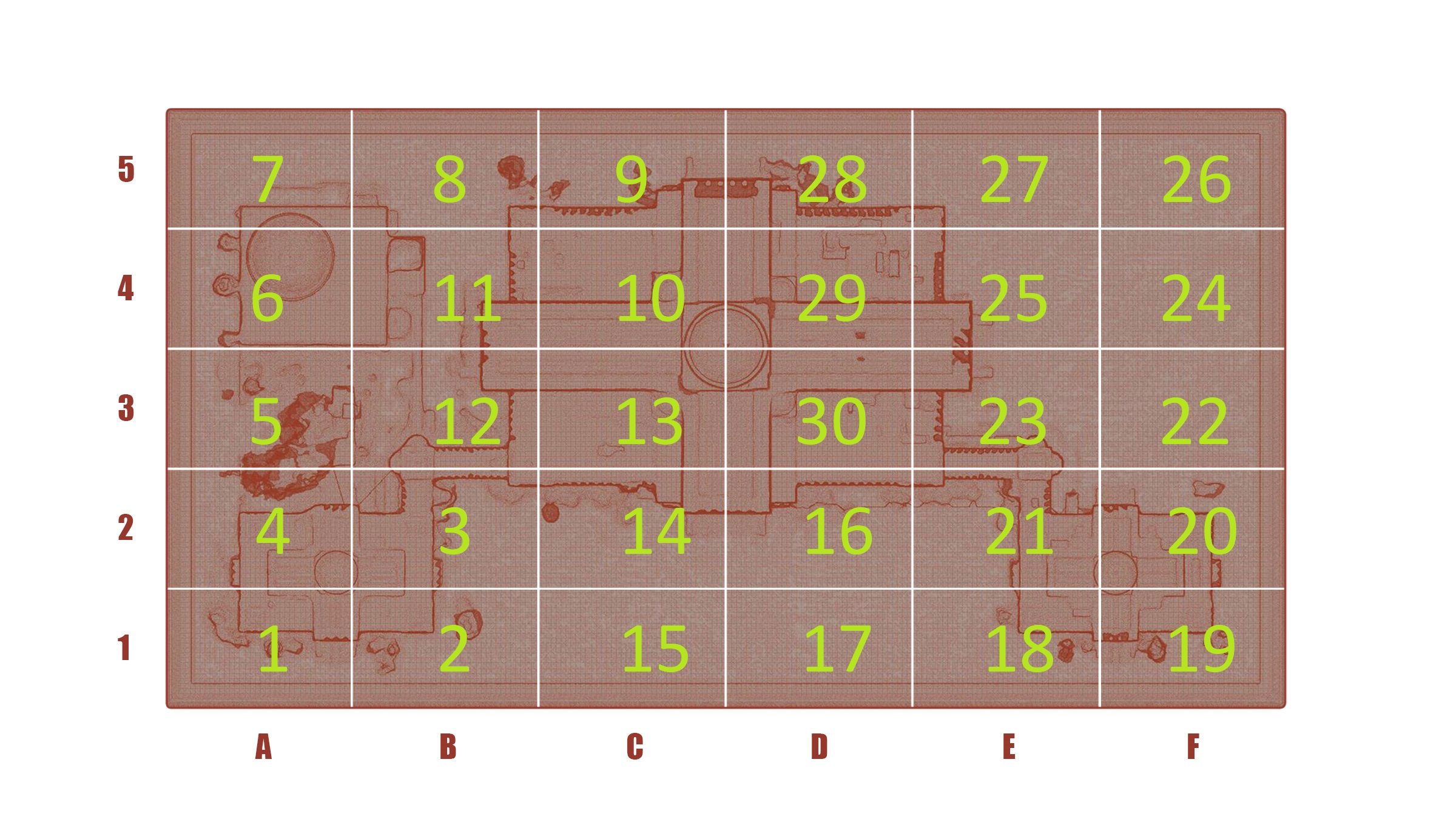
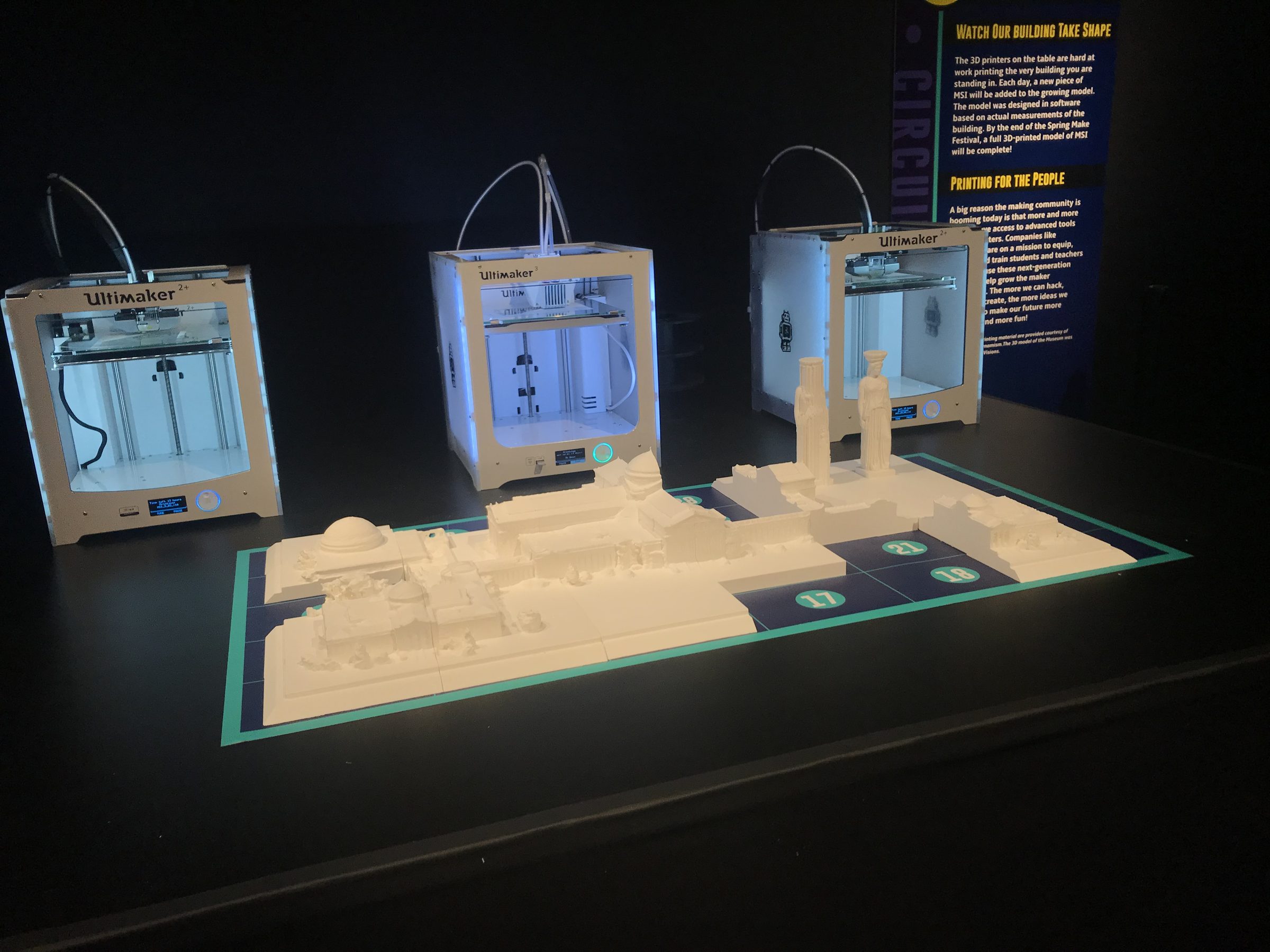
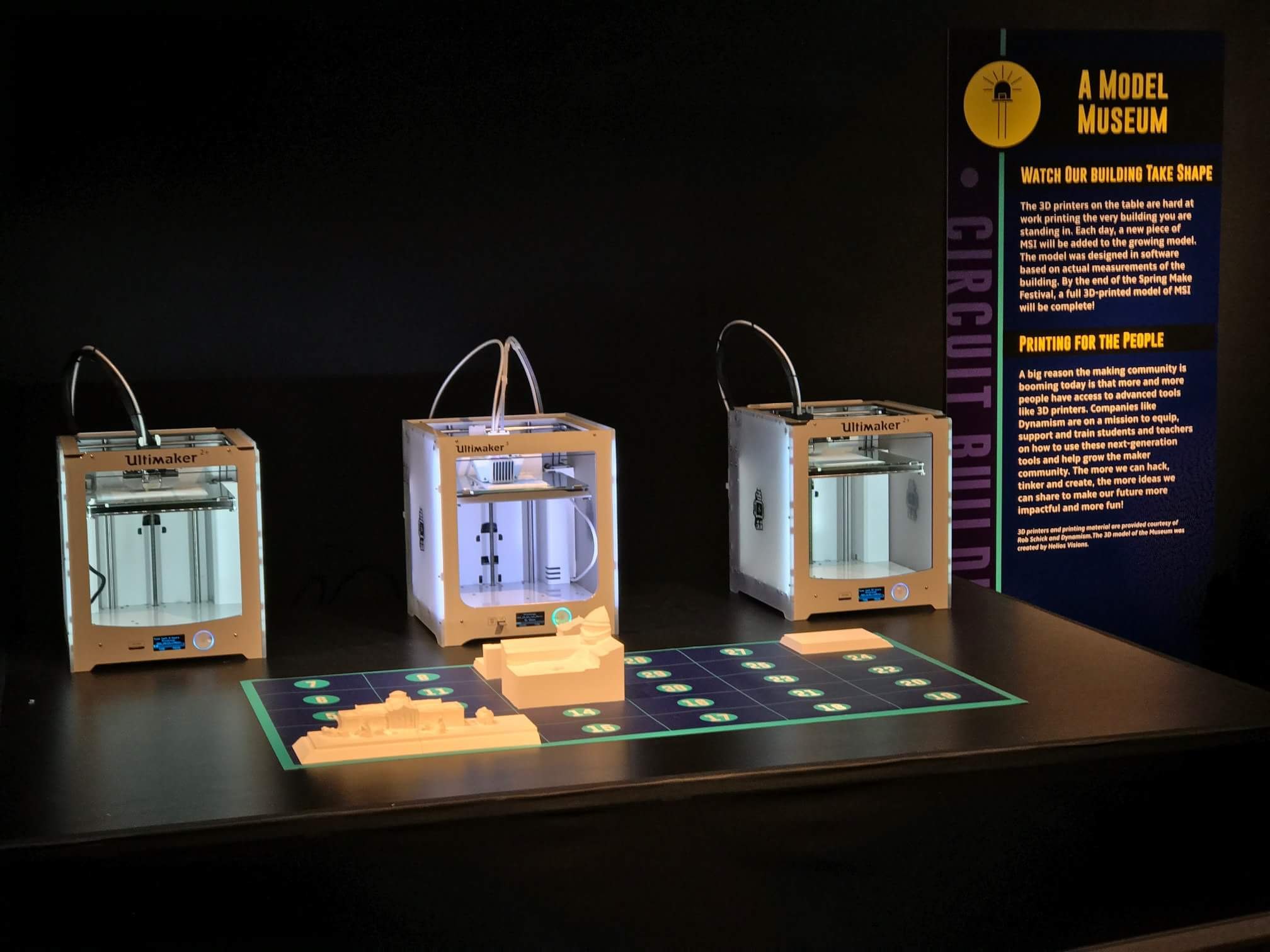
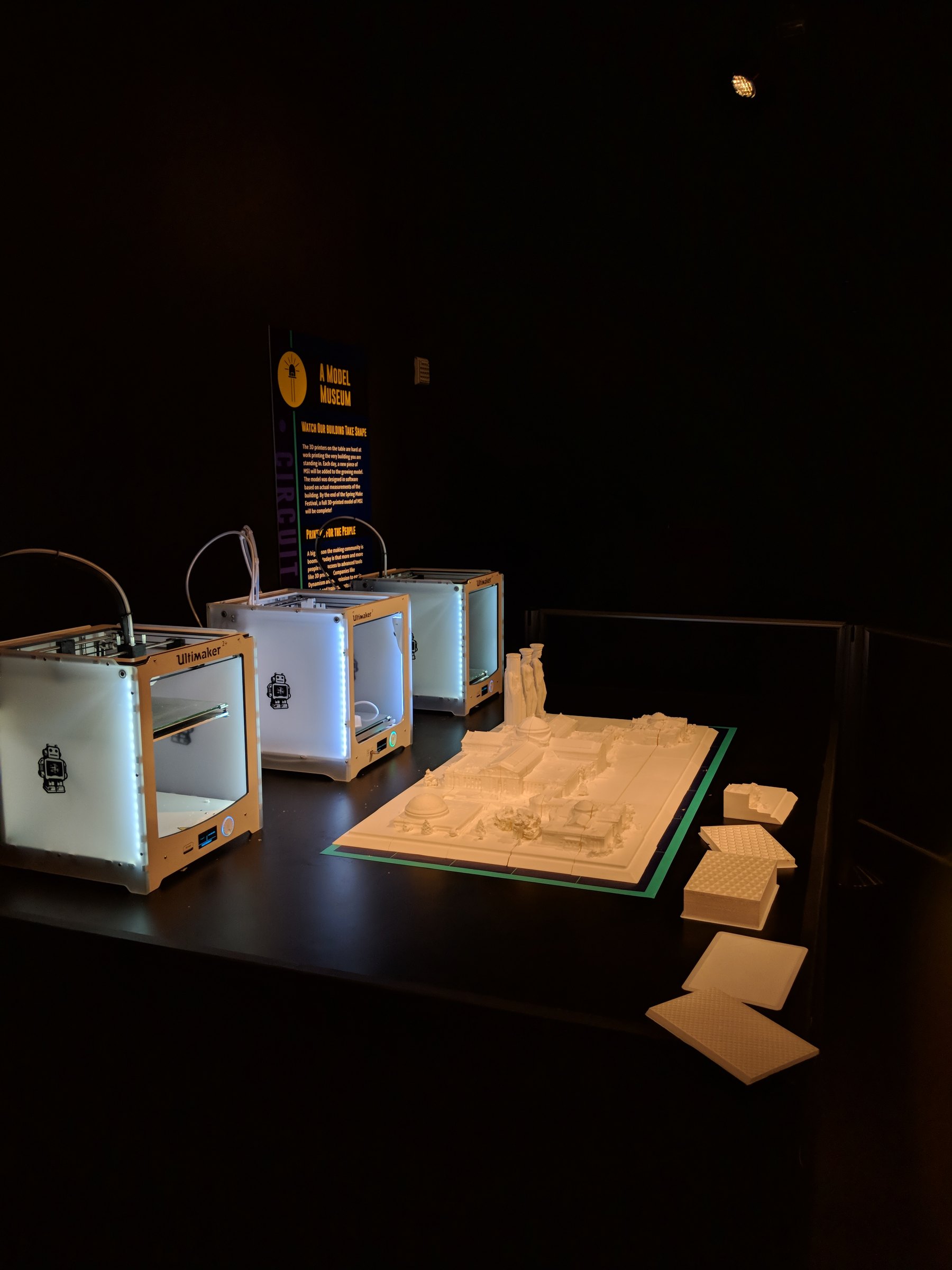
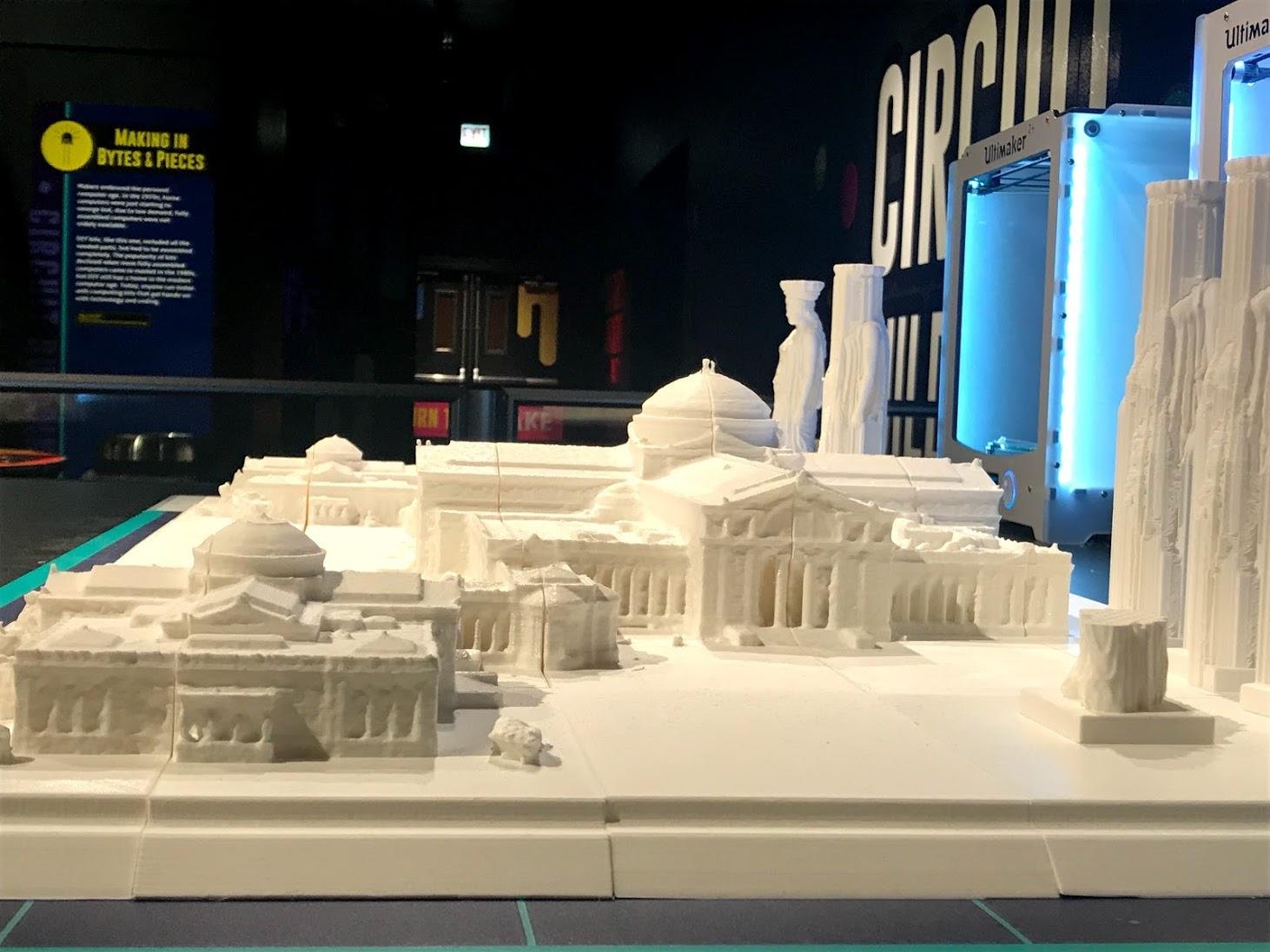
We worked backward from the time we had. The festival ran a month, so we divided the model into 30 sections: one new part of the museum would be printed each day, set in place, and revealed the next morning. We numbered the pieces so the build would come together like a mosaic and look interesting every single day. The most intricate sections took around 10 to 12 hours each to print.
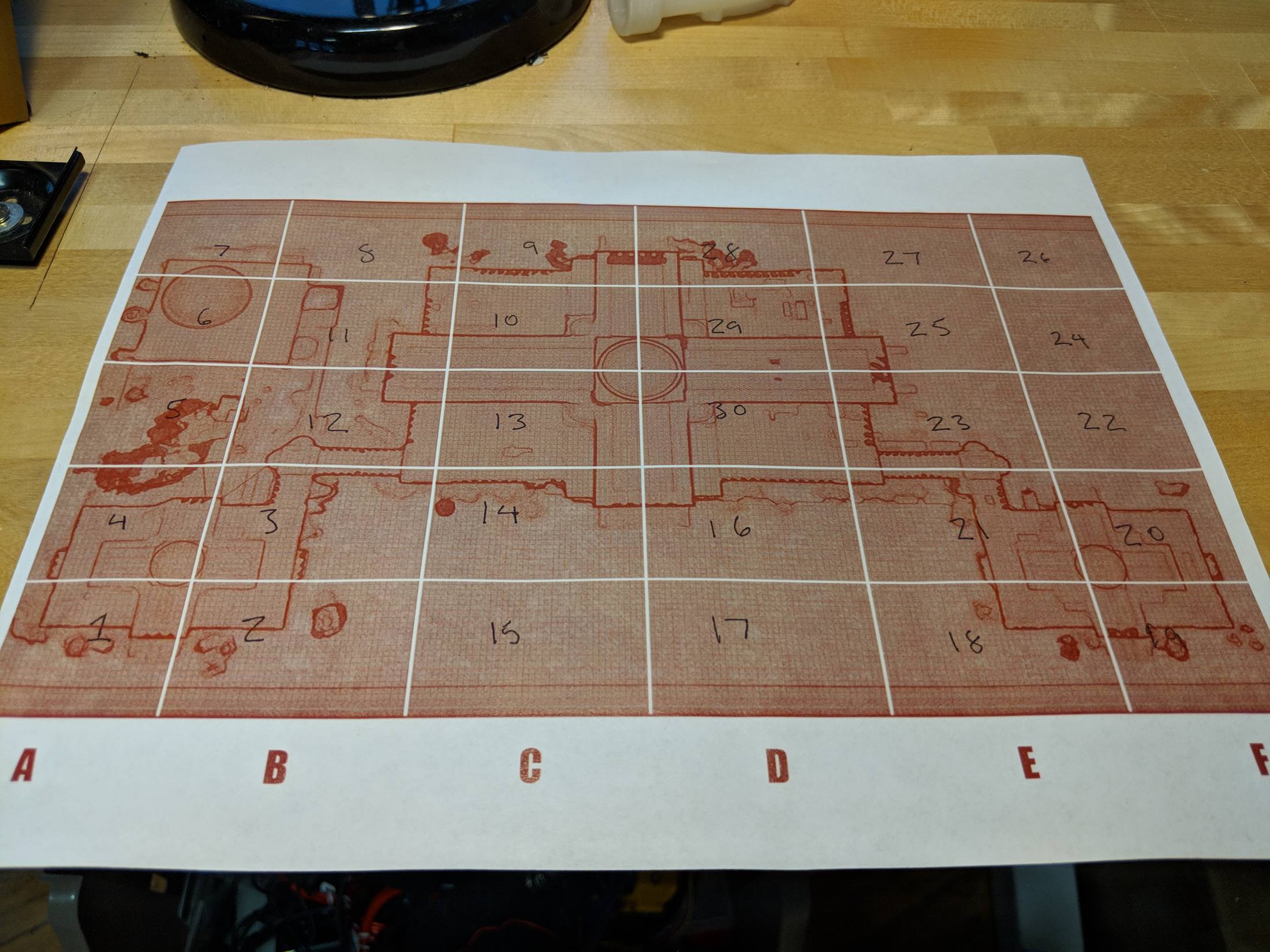
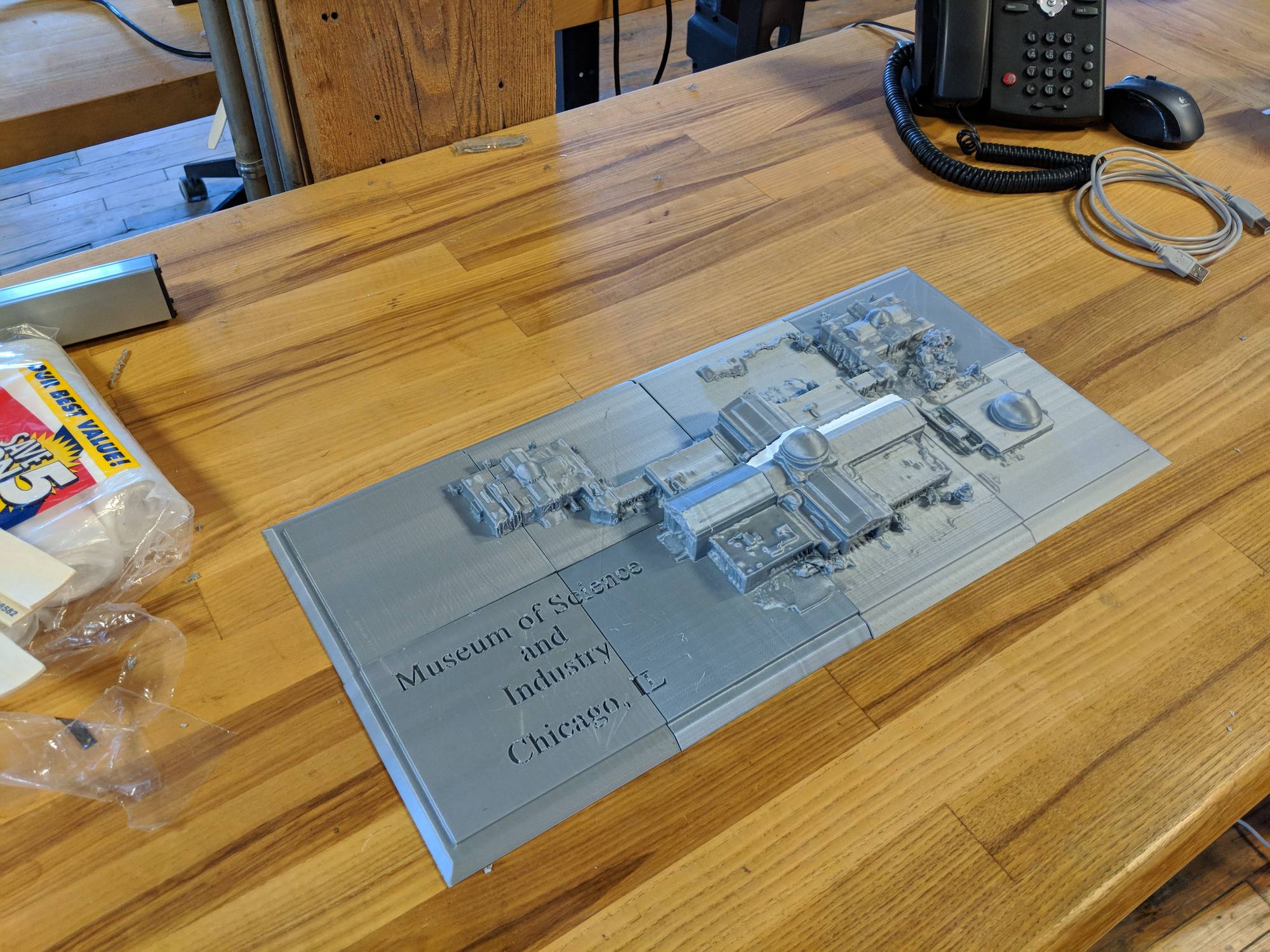
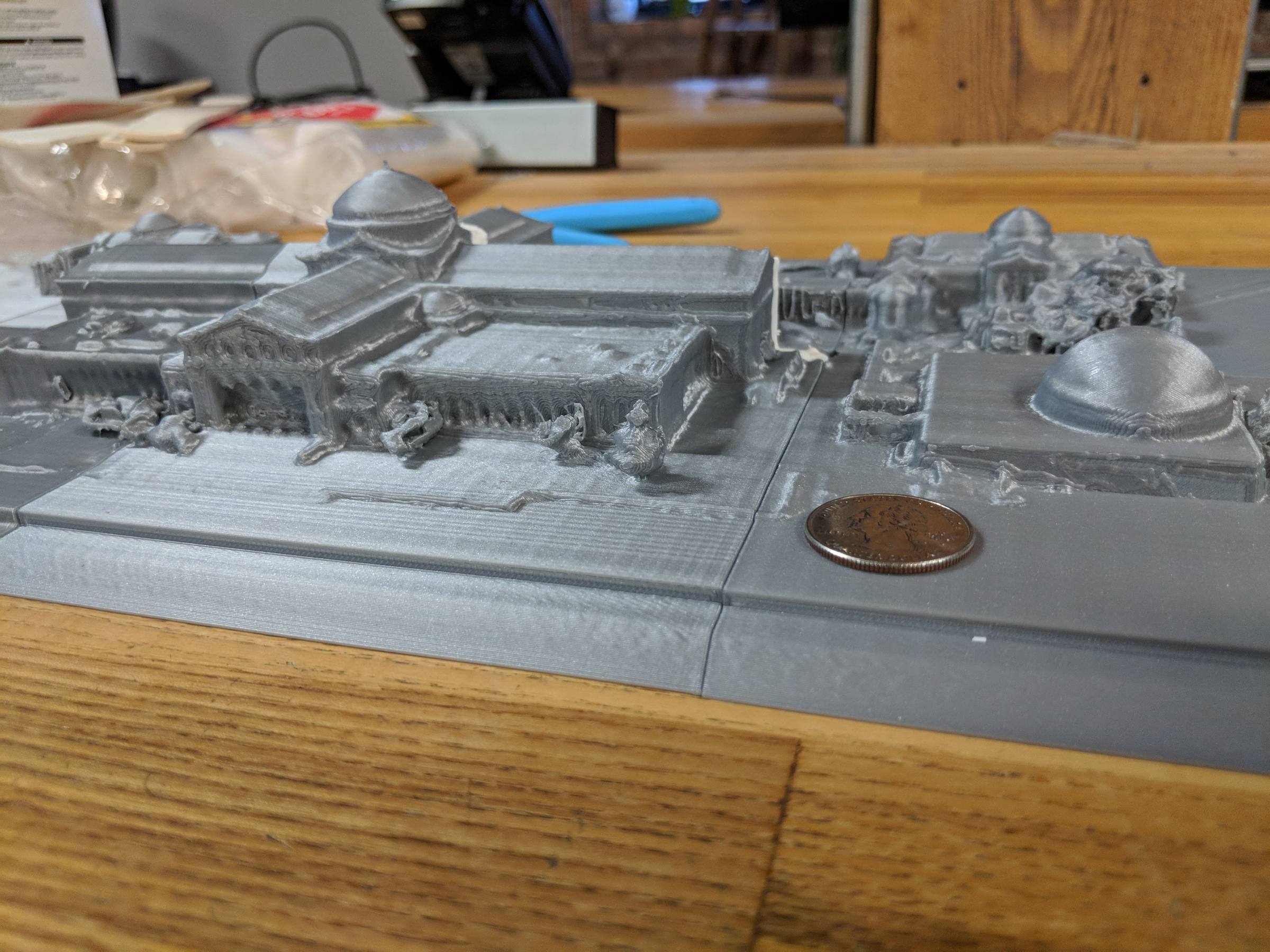
The sign next to the exhibit put it best:
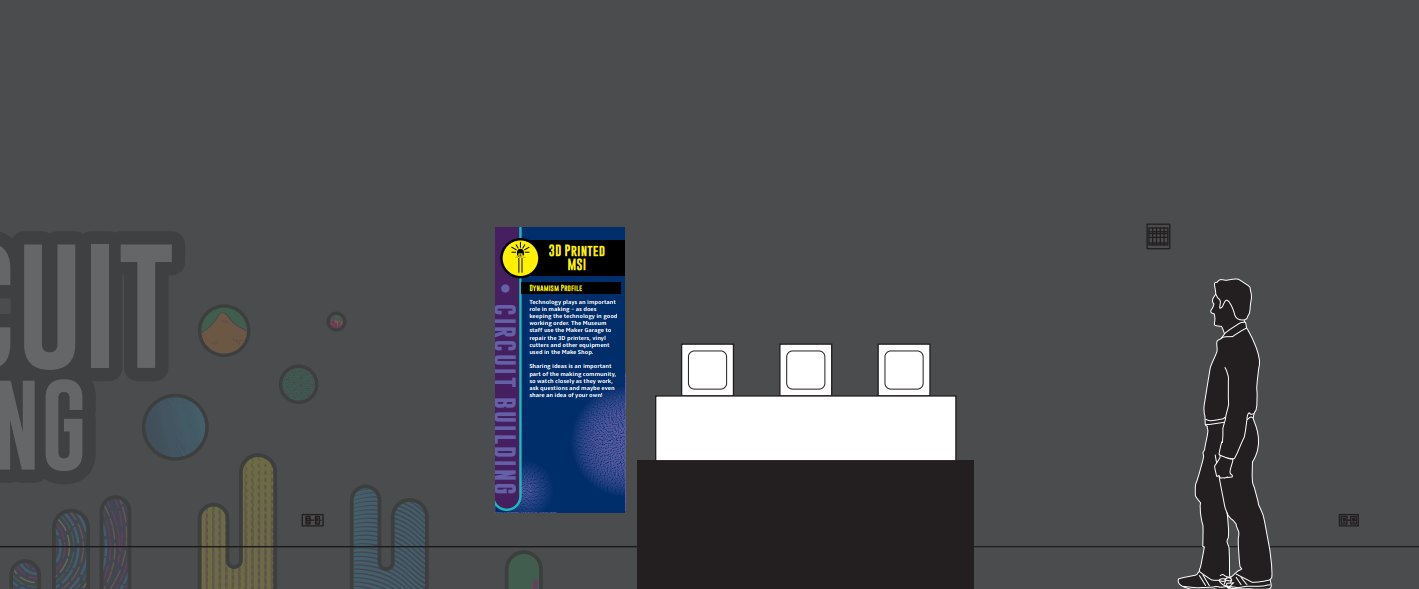
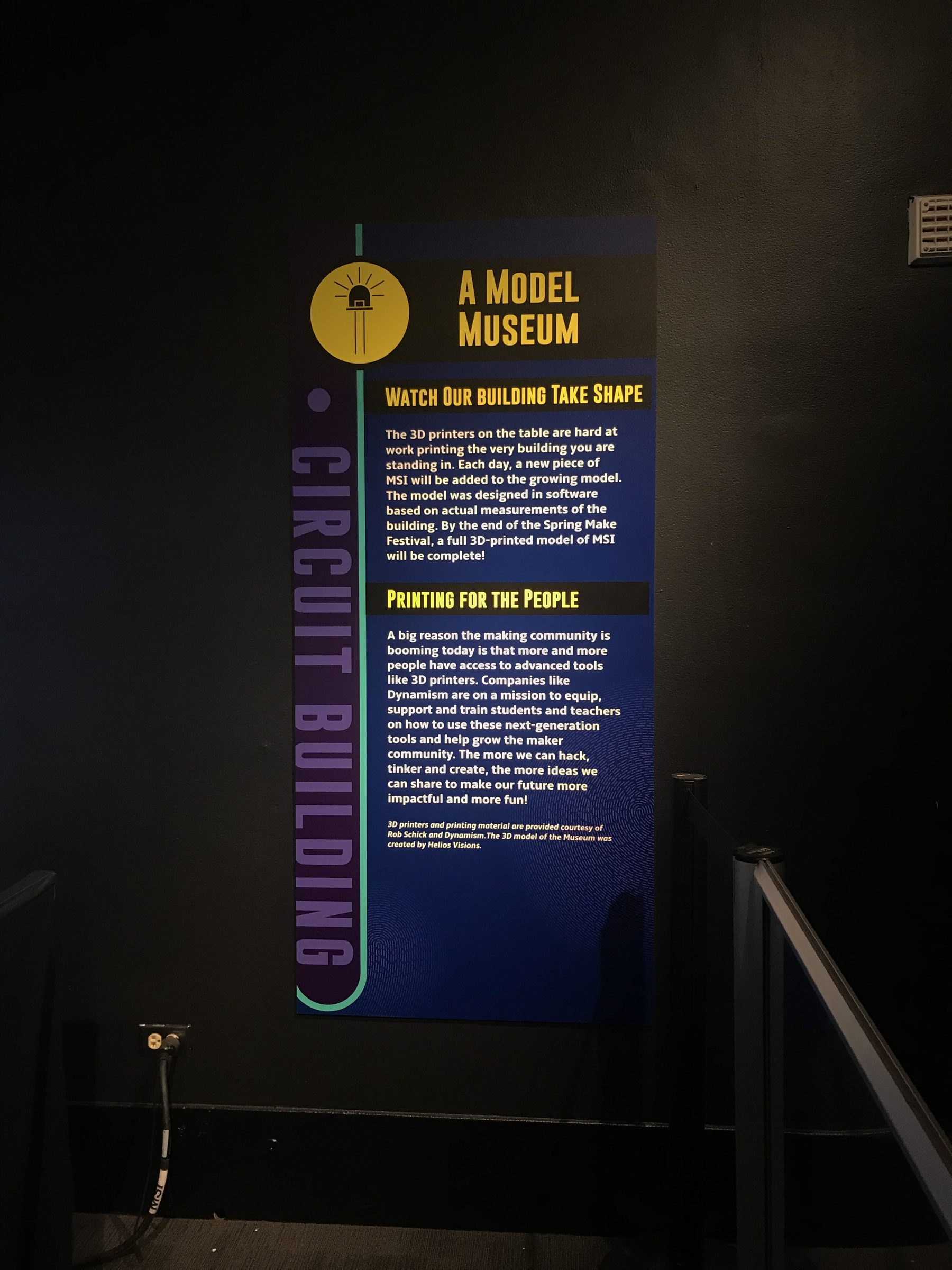
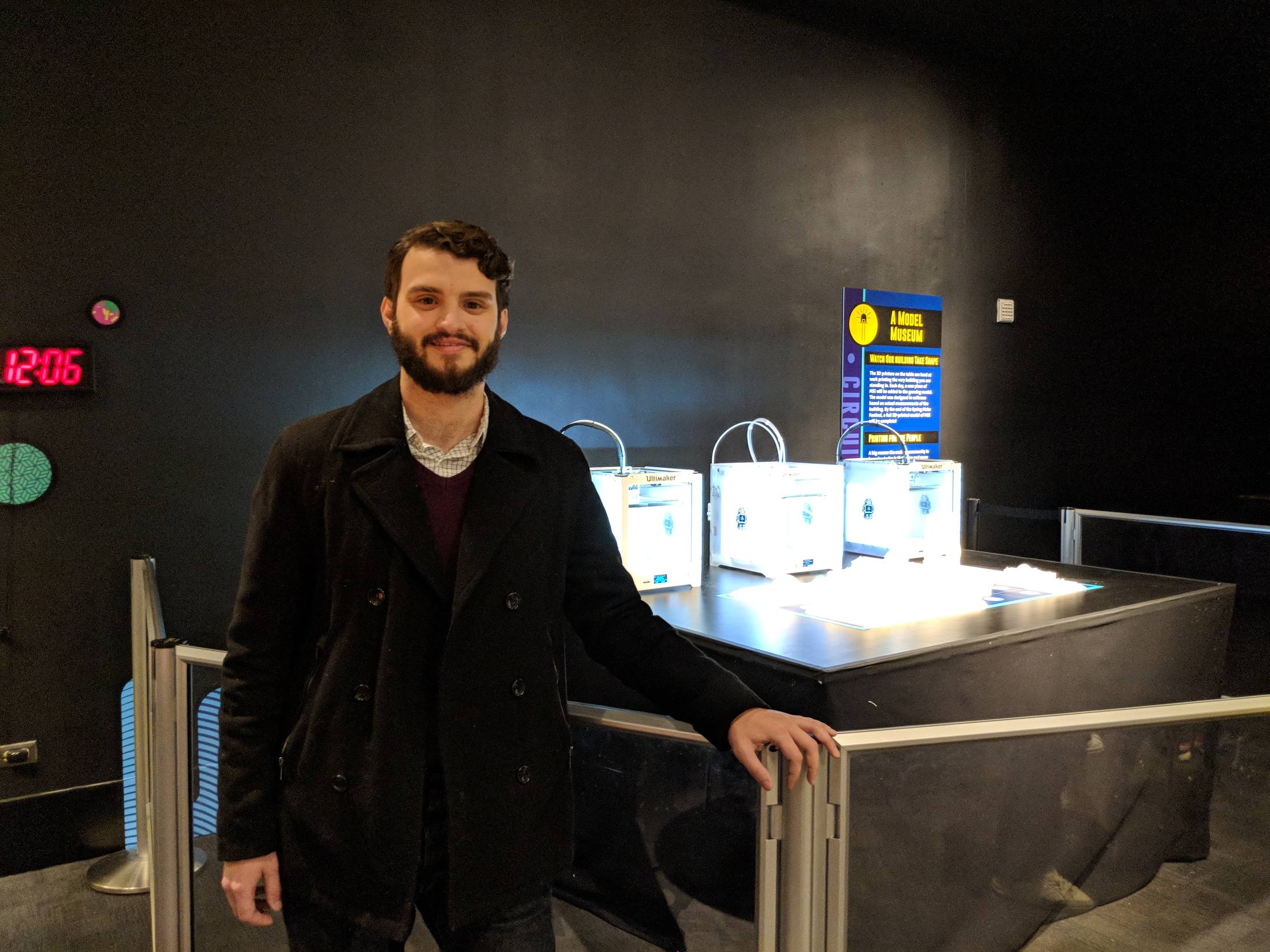
A Model Museum: Watch our building take shape. The 3D printers on the table are hard at work printing the very building you are standing in. Each day, a new piece of MSI will be added to the growing model.
The exhibit sign
Build month
A few weeks before opening, in February 2018, I was back at the museum, and a drone was flying over the front steps.
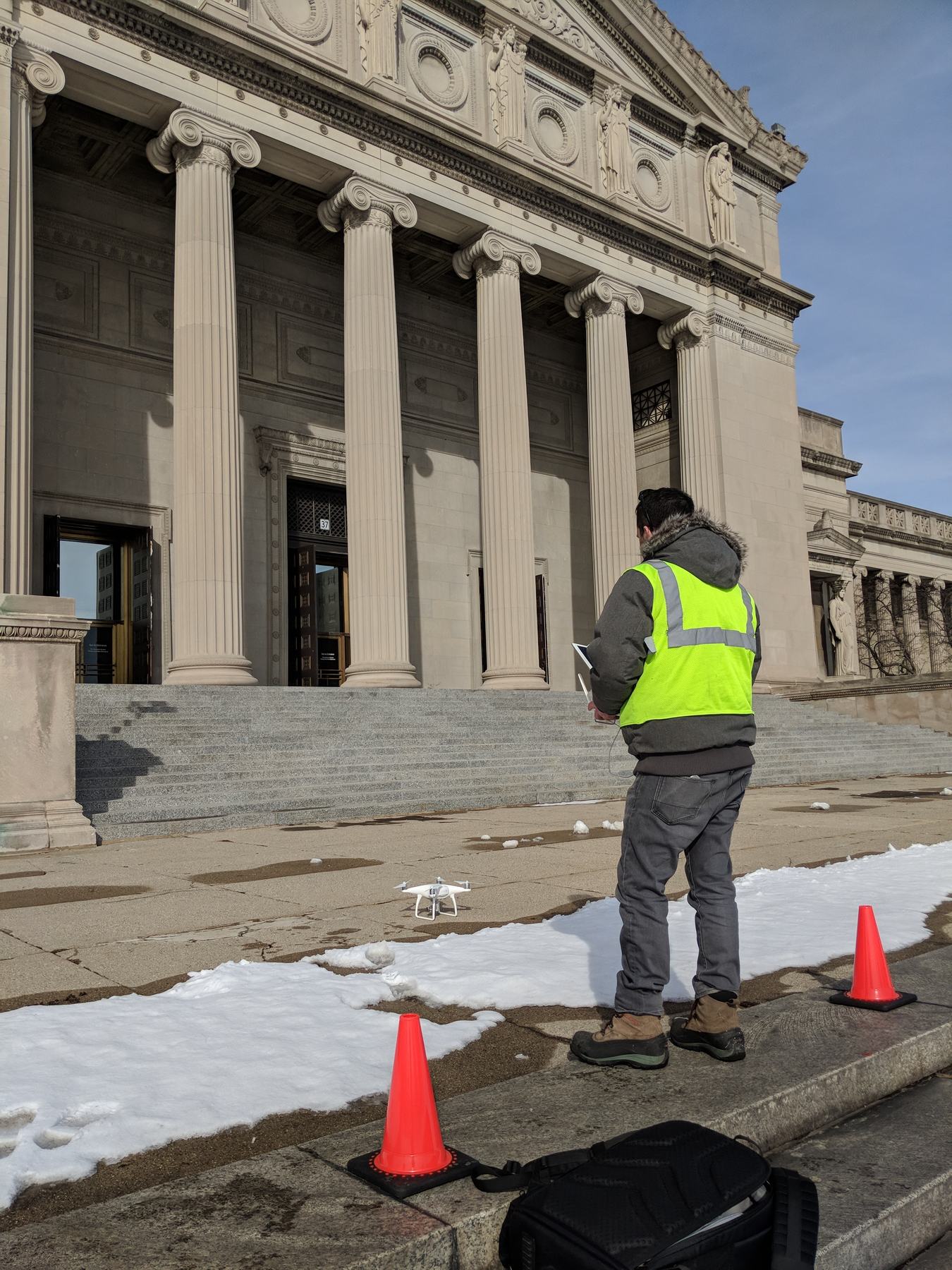
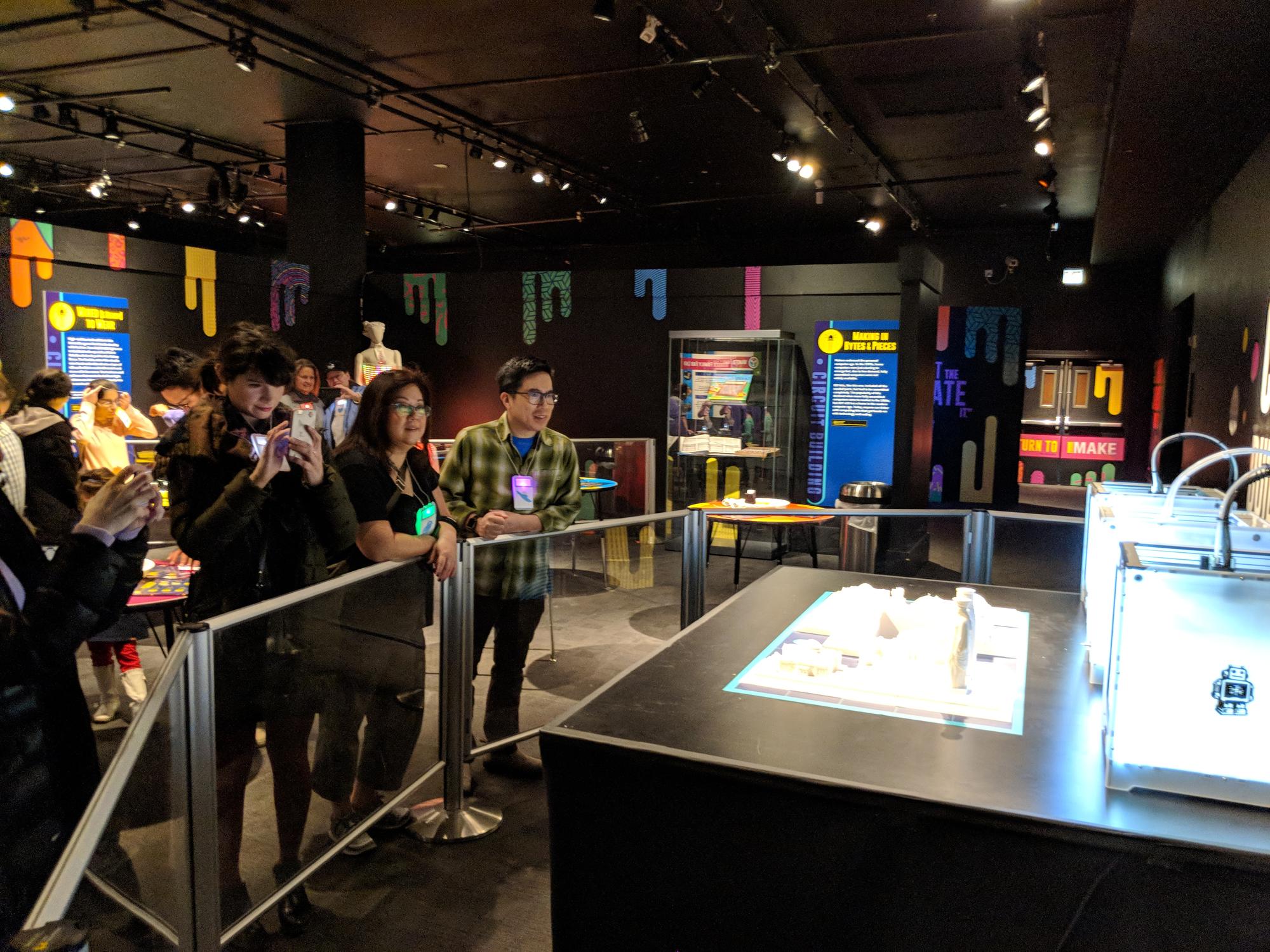
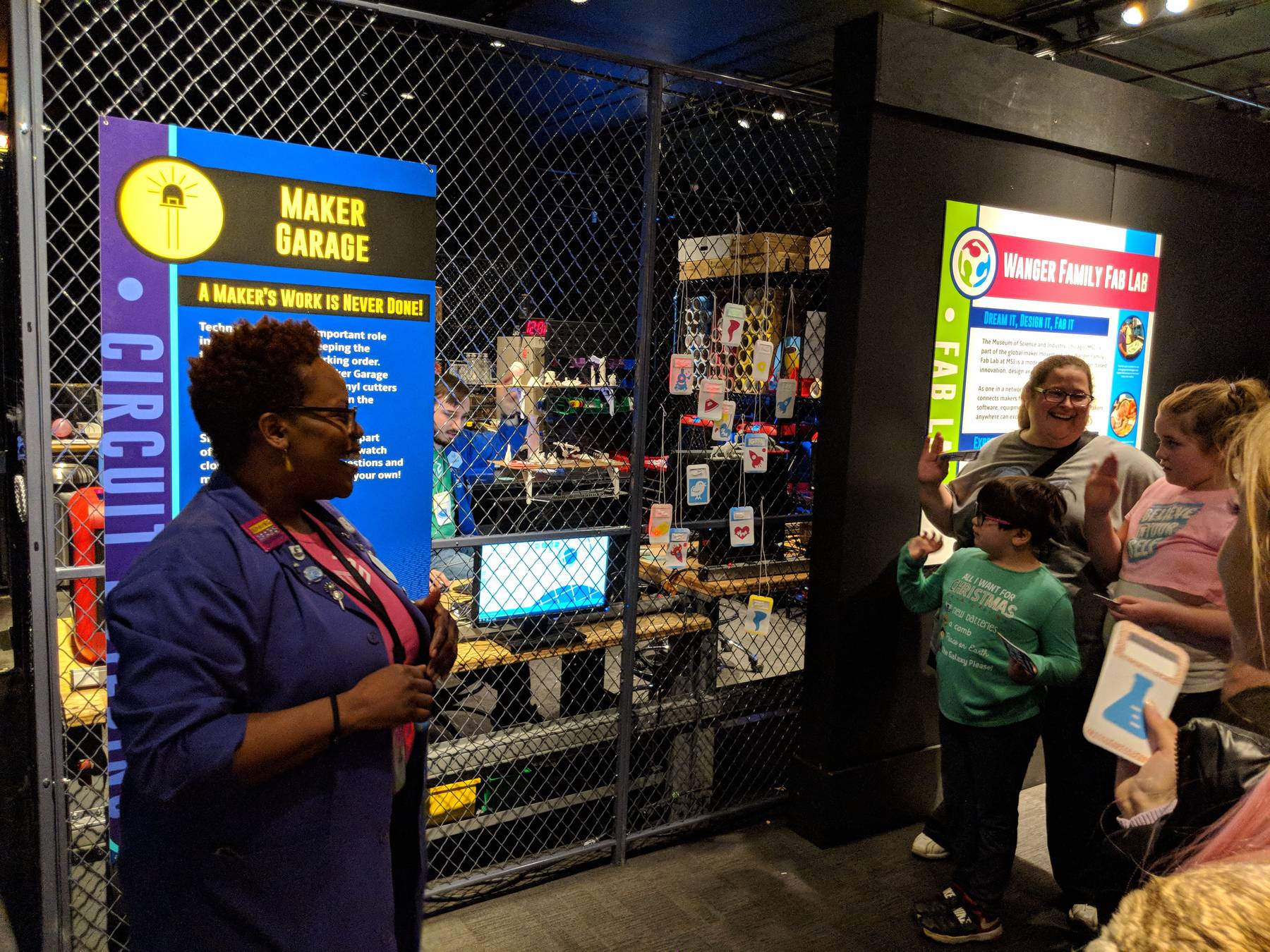
There were plenty of technical challenges, but it all came together in March 2018. With Ultimaker 2+ and Ultimaker 3 printers loaned by Dynamism, along with the filament, MSI’s staff took the pre-sliced files we gave them and set the printers to work. Every day, hundreds of museum-goers saw the printers in action and the growing model right in front of them. Over the month, thousands of Chicagoans got to see the technology at work.

A permanent home
The last piece went in on the final day of the festival. The 3D model is now owned by MSI, and the printed pieces are stored as artifacts. I could not be prouder!
“You never change things by fighting the existing reality. To change something, build a new model that makes the existing model obsolete.”
Buckminster Fuller, the quote I closed my talk about this project with
Afterlife
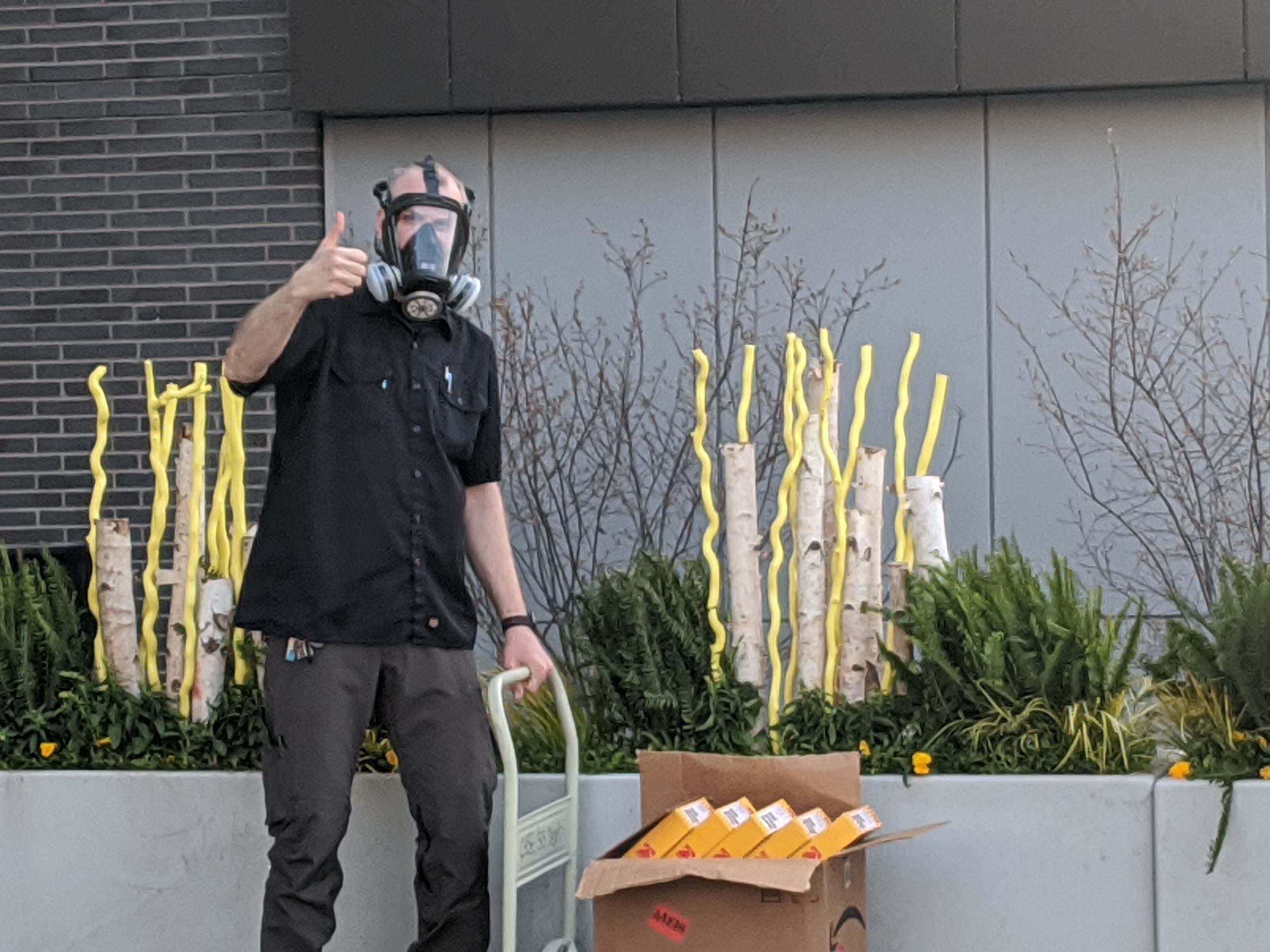
My relationship with MSI kept growing. During COVID, Dynamism helped fabricate face shields that were distributed to essential workers on Chicago’s South Side, and I hosted a couple of virtual Junior Science Cafes about the project.
I also told this story in two talks: “Digital Alchemy: 3D Scanning and 3D Printing the Museum of Science and Industry,” and a joint presentation with Helios Visions called “From Physical to Digital to Physical,” which is where this page’s title comes from.
Bonus: the filter that didn’t make it
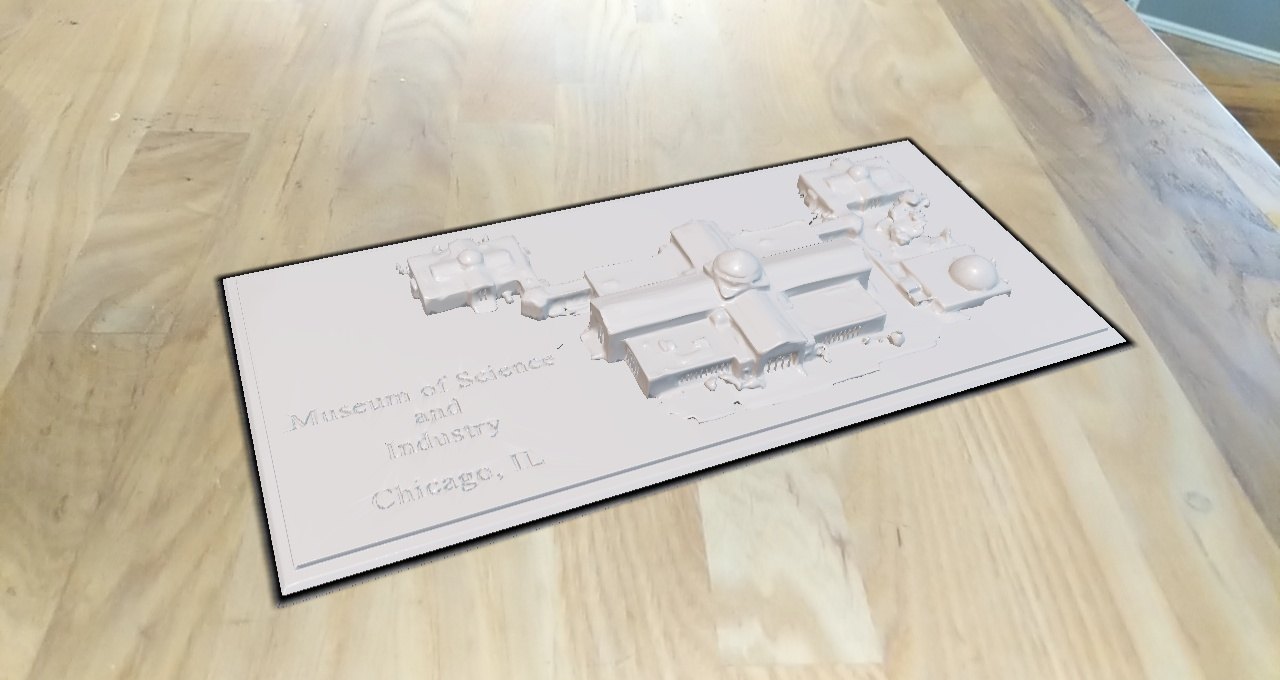
We ended up leaving this one on the cutting room floor, but I worked with the talented 3D artist Thor Man de Kook on a Snapchat filter that drops a virtual version of the MSI model into your surroundings. Helios Visions was also building VR and AR viewers for the scan in Unity at the time.
What I learned
Looking back, nothing about this project was planned. It started with a Reddit post and a question — what if I could hold that scan in my hand? Every step after that — repairing a messy mesh in Meshmixer, building a base in 123D Design, slicing it into 30 pieces, pitching a museum — came from following that curiosity one move further than felt reasonable.
The biggest lesson I took away is to let curiosity and imagination lead, and then do my best to keep up. I didn’t have a roadmap, a budget, or a museum on speed dial. I had a small print that looked cool, and people like Tyler, Ted, Olivia, Chris and Aron who were willing to say yes to the next step. The project grew because the idea was allowed to get bigger than my plan for it.
It also taught me that ‘finished’ can look like letting go. The model belongs to MSI now, and the files aren’t mine to share — which is exactly how it should be. The best version of a personal project might be the one that ends up somewhere other people get to enjoy it.
Thanks to Tyler Gibson and Ted Parisot of Helios Visions for the scan · Olivia Castellini and the Fab Lab team at the Museum of Science and Industry · Chris Stucke, Aron Jones and the rest of the Dynamism team · ChiVR for the introduction · Thor Man de Kook for the AR model.
Related: 3D printing a brain · Signage · Voronoi Experiments · All projects